Table of Contents
How much does a used pallet cost? There’s no one price because pallet prices are all over the place. One supplier quotes $5, another says $18, and suddenly buying pallets starts feeling more confusing than buying airline tickets. The truth is that pallet material, condition, size, region, and freight all affect pricing. A closer look at current market trends makes the numbers a lot easier to understand.
Used Pallet Price Guide by Material and Condition
The average used pallet price depends on material type, condition, and quantity purchased. Buyers searching for affordable warehouse shipping solutions usually compare wood, plastic, and metal options before making a decision.
Estimated Value by Pallet Type
| Pallet Type | Used Price Range | New Price Range |
| Wood | $3 to $15 | $11 to $25 |
| Plastic | $15 to $80 | $40 to $150 |
| Metal | $40 to $200 | $100 to $300 |
Used wooden pallet costs stay lower than most alternatives because wood pallets are widely available and easier to repair. Many recycled wood pallets are still strong enough for warehouse use, shipping, and storage applications. Standard 48×40 sizes are usually the easiest to source in bulk.
The cost of used plastic pallets varies more because certain design features raise costs. Rackable models, export-ready designs, and food-grade plastic all raise pricing. Plastic pallets also last longer than wood in damp or sanitary environments, which helps offset higher upfront costs.
Metal pallets are usually made from steel or aluminum. Steel pallets are heavier and commonly used for heavy items in automotive or industrial manufacturing. Aluminum pallets cost more but resist rust and weigh less, making them easier to move around warehouses. Even used metal pallets tend to carry a higher resale value because of their durability and long service life.
Used Wooden Pallet Cost by Grade A, Grade B, and Grade C
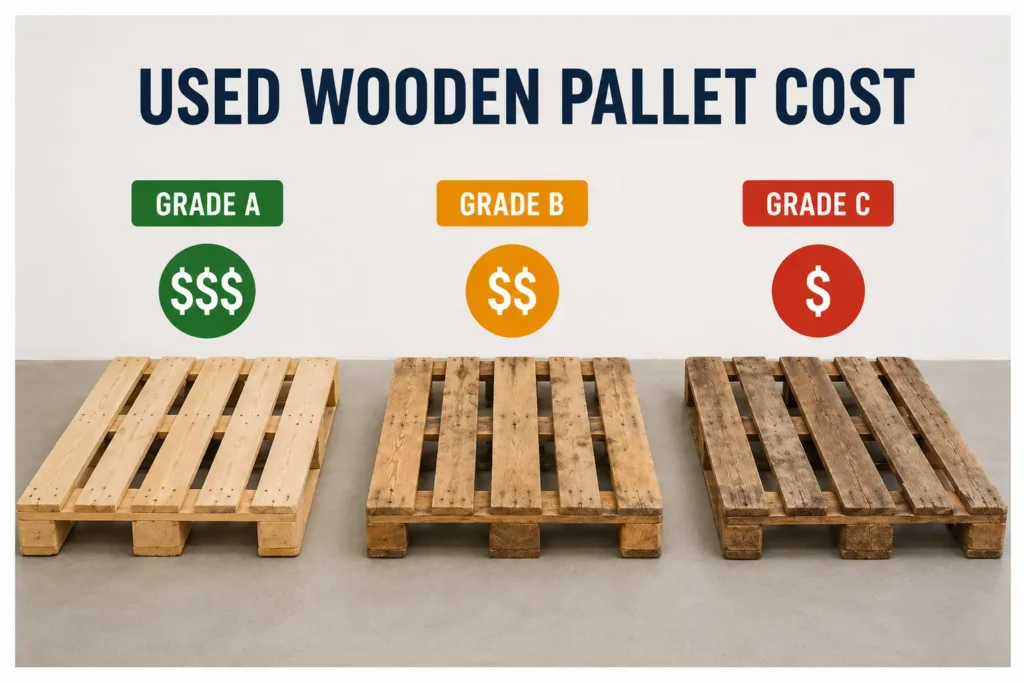
Wood pallet grading plays a major role in pricing. Clean pallets with fewer repairs naturally cost more than heavily worn units. Most businesses buying recycled pallets compare grades before choosing inventory.
- Grade A: Clean appearance, minimal repairs, solid deck boards, and fully functional stringers
- Grade B: Structurally sound with visible repairs, discoloration, or minor wear
- Grade C: Heavy cosmetic damage or multiple repairs, often used for scrap or limited reuse
Grade A pallets are popular for retail shipping, export operations, and products that need a cleaner presentation. Grade B pallets are usually the sweet spot for warehouses trying to save money without sacrificing reliability. Grade C units work better for internal movement or one-way shipments.
The 48×40 GMA pallet remains the most common pallet size in North America, so pricing tends to stay competitive. High demand also makes these standard pallets easier to resell later.
Regional demand can create a big difference in pricing, too. A busy logistics market with many pallet buyers may push costs higher than smaller rural areas with lower warehouse activity. Freight availability and pallet recycling density also influence local supply.
Heat-treated pallets usually cost more because they meet export requirements for international shipping. According to a 2019 article by the Food and Agriculture Organization of the United Nations, “Regulation of wood packaging material in international trade,” export-compliant pallets must meet phytosanitary treatment standards before crossing many international borders.
Cost of Used Plastic Pallets vs Metal Pallets
Plastic and metal pallets both cost more than wood, but they solve different operational problems. Plastic pallets are commonly used in food processing, pharmaceutical operations, and export shipping because they resist moisture and are easier to clean. Many suppliers also offer nestable or rackable designs that help reduce storage space.
Metal pallets are usually chosen for long-term industrial use. Automotive plants, chemical facilities, and manufacturing companies often rely on steel pallets for heavier unit loads and repeated forklift handling. The higher upfront cost can still make sense because metal pallets last much longer than wood or plastic options.
The final price depends on pallet condition, load capacity, and quantity purchased. Rising transportation expenses and warehouse operating costs have continued to affect industrial packaging markets across North America.
Market Trends: What Affects Pallet Value and Current Market Prices?
Pallet pricing changes more often than many buyers expect. Lumber costs, freight rates, and warehouse demand all affect resale pricing throughout the year.
Wood pallets usually rise in price when lumber markets tighten. Even used inventory becomes more expensive during periods of limited raw material availability because pallet recyclers compete harder for usable cores.
Shipping costs most definitely influence market prices. A pallet supplier with inventory nearby may offer a lower total cost than a cheaper seller located several states away. Truckload shipments help reduce the cost per pallet, especially for large warehouse operations.
Regional demand creates noticeable pricing differences. A Grade B pallet in Los Angeles, California, may sell for more than a cleaner pallet in a smaller market with lower logistics activity. Buyers needing immediate delivery often pay higher prices compared to operations with flexible timelines.
Condition drives resale value more than anything else. Clean, inspected pallets with fewer repairs consistently bring stronger resale value. Reliable pallets that can survive repeated warehouse handling stay in demand even during slower market cycles.
New vs Used Pallets: Is the Savings Worth It?
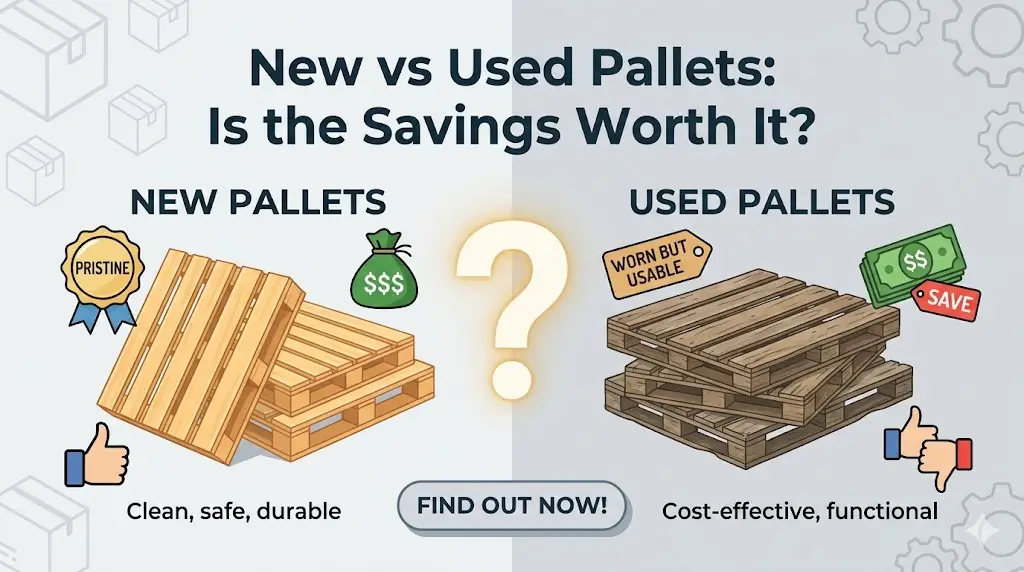
Used pallets make financial sense for many warehouse operations, especially when buying in volume. Reused inventory usually costs far less than brand-new pallets while still providing dependable performance for shipping and storage.
A regional distribution warehouse switching from new plastic pallets to refurbished inventory through Container Exchanger may reduce packaging expenses while still maintaining operational efficiency. Bulk purchases can lower costs even more, especially for facilities moving high product volumes every week.
New pallets still make sense in certain situations. Export compliance, customer presentation standards, or specialized dimensions may require new inventory. Custom pallets and other sizes also become necessary for unique products or automated warehouse systems.
For most businesses, though, used inventory offers a practical balance between cost savings, sustainability, and performance.
Where to Buy Pallets Online or From Local Suppliers
Businesses searching for where to buy used pallets often compare local recyclers with online marketplaces. Local businesses may offer quick pickups or smaller quantities, but inventory can vary quite a bit from week to week.
Online marketplaces give buyers access to many suppliers across North America, making it easier to compare pallet conditions, quantities, pricing, and delivery options in one place. That visibility becomes especially helpful for buyers sourcing multiple truckloads or hard-to-find pallet sizes.
Container Exchanger helps connect buyers and sellers for wood pallets, plastic pallets, bulk containers, metal storage bins, IBC totes, and other industrial packaging products. Companies can also sell pallets through the marketplace, helping recover value from excess warehouse inventory.
Freight coordination is of equal importance. A supplier with nearby inventory may reduce transportation expenses and speed up delivery times. Buyers looking for free pallets can sometimes source small quantities locally, but a consistent commercial supply usually requires a larger reseller network.
FAQs
Used pallets are worth the money for many warehouse and shipping operations because they reduce packaging costs while still providing durable performance for daily material handling.
Used wood pallets are usually the cheapest heavy-duty option because they are widely available, repairable, and easier to source in standard sizes across North America.
Buying pallets in bulk usually lowers the price per pallet because suppliers can spread freight and handling costs across larger shipments.
Custom pallets are worth the extra money for operations handling oversized products, automated systems, or unique shipping requirements that standard sizes cannot support.