Many shipping decisions are still made on “gut feel” until your team discovers that the last two pallets won’t fit. That surprise turns into rush freight and missed delivery windows.
Knowing exactly how many pallets fit in a 20 ft container or 40 ft container gives you control over costs and planning. This guide shares practical counts and layout tips to get more value from every container.
Understanding 20 & 40 ft Container Pallet Capacity
Standard containers look similar on the outside, but inside dimensions and weight limits dictate the shipping container pallet capacity. A 20 ft holds ~33 cubic meters while 40 ft doubles that, though payload rises only slightly and total weight often maxes out first.
Total weight can max out before the floor fills up. Heavier steel pallets cut cargo weight more than wood or plastic pallets, so payload shrinks faster.
Euro Pallet Sizes vs Standard Pallets in Containers
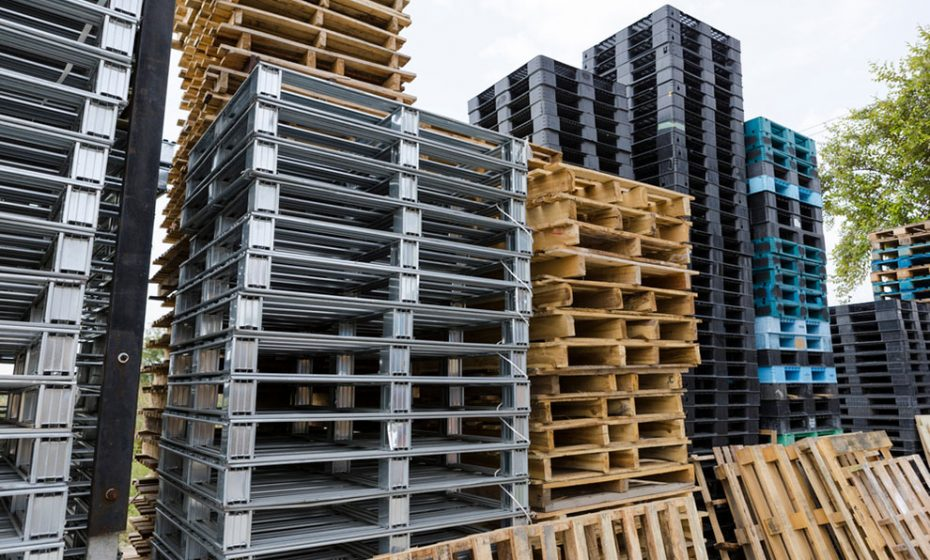
Euro pallets and standard American pallets use different footprints. A Euro pallet measures 800 × 1200 mm, while a North American GMA pallet is 48 × 40 inches, and both can be made in wood, pressed wood, or as a reusable plastic pallet. Euro pallets tend to pack more neatly in many 20 ft containers, with less wasted space near the container walls.
Standard pallets are larger and can be better suited to heavy cargo and certain racking systems, but they usually mean fewer positions per container.
Standard Pallet Size and Dimensions
Common shipping container pallet sizes anchor global trade planning. North America’s standard pallet is 48 × 40 inches (1219 × 1016 mm), used in most load plans. Internationally, expect 1200 × 1000 mm and 1200 × 800 mm footprints.
Formats like 42 × 42 inches or 40 × 48 inches serve specific industries, but planners asking how many standard pallets in a 40 ft container usually mean 48 × 40 loads, single-stacked, no overhang.
How Many Pallets Fit in a 20 ft Container?
Most shippers asking “how many pallets in a 20 ft container” want a quick, reliable answer for standard 48 × 40 pallets. In practice, a 20 ft container typically holds around 10 standard pallets, single-stacked, with a tight pallet arrangement in two rows of five.
If you switch to Euro pallets, you can often fit 11. Overhang from bulk containers or pallet boxes can cost a slot, so plan around full-loaded footprints, not just pallet dimensions.
How Many Pallets Fit in a 40 ft Container?
The next question is usually “how many pallets in a 40 ft container,” so you can compare per-unit freight costs. A standard 40 ft container typically holds about 20 to 21 standard 48 × 40 pallets, single-stacked, depending on orientation and how tightly you pack against the container walls.
Euro pallets generally come in at 24 per 40 ft container with tight alignment. You can sometimes double-stack when cargo is light and stable, but height and weight limits, plus pallet loading height, will cap how aggressive you can be.
“High cube containers add an extra foot of weight. This additional space makes them ideal for transporting taller items or maximizing volume.” — Sirelo
How Many Pallets in a Container: 20 ft vs 40 ft Container Capacity
See how 20 ft and 40 ft containers compare on paper before planning maximum pallet loads. The table below shows typical specs for standard units, plus conservative pallet capacities assuming single-stacked, well-aligned loads with no overhang.
| Specification | 20 ft Container | 40 ft Container |
| External Dimensions | ||
| Length | 20 ft (6.058 m) | 40 ft (12.192 m) |
| Width | 8 ft (2.438 m) | 8 ft (2.438 m) |
| Height | 8 ft 6 in. (2.591 m) | 8 ft 6 in. (2.591 m) |
| Internal Dimensions | ||
| Length | 19 ft 4 13/16 in. (5.902 m) | 39 ft 5 11/16 in. (11.96 m) |
| Width | 7 ft 8 1/8 in. (2.352 m) | 7 ft 8 1/2 in. (2.35 m) |
| Height | 7 ft 9 7/8 in. (2.385 m) | 7 ft 10 1/8 in. (2.39 m) |
| Weight | ||
| Tare Weight | 4,850 lbs (2,200 kg) | 8,554 lbs (3,880 kg) |
| Payload | 55,126 lbs (25,000 kg) | 58,624 lbs (26,559 kg) |
| Gross Weight | 59,526 lbs (27,200 kg) | 67,200 lbs (30,480 kg) |
| Doors | ||
| Width | 7 ft 8 1/8 in. (2.34 m) | 7 ft 8 1/8 in. (2.34 m) |
| Height | 7 ft 5 3/4 in. (2.28 m) | 7 ft 5 3/4 in. (2.28 m) |
| Capacity | ||
| Standard Pallets | 10 | 21 |
| Euro Pallets | 11 | 24 |
These figures answer the basic question of how many pallets in a container for the most common setups, but you still need a few best practices to turn specs into real-world loads.
Optimal Container Shipping Tips
The way you arrange pallets inside the box is just as important as the raw count. Aligning pallets along the length of the container is usually the best pallet arrangement for easy loading and consistent clearances, but rotating some loads crosswise can squeeze a little more space out of certain footprints.
Slip sheets and shrink-wrap can tighten up loads and reduce wasted space between pallets. Light stable products can double-stack if loading height clears the doors and ceiling. When you plan how many pallets fit in a 20-foot container for a given SKU, leave a little available space near the doors for airflow and safe unloading.
Calculating How Many Pallets Can Fit in a Container
You don’t need complex software to sanity-check your plan for how many pallets fit in a 40-foot container or a 20 ft unit.
Start by measuring the internal length and width of the container, then divide by pallet length and width to see how many positions fit in each direction. Repeat for any mix of Euro and standard pallets you use. After that, check load weight against payload so total weight stays under the rating, and compare loaded pallet height to the door opening to avoid scraping the roof.
Common Mistakes When Loading Pallets
The costliest errors are usually the simplest to dodge.
- Overestimating container capacity based on floor space alone, ignoring payload and height limits
- Cargo overhang stealing a slot, especially from odd-sized pallet boxes or wide cartons
- Treating all loads as double-stackable, when unstable goods kill that option
- Random pallet jacks inside the container damaging back-row cartons before anybody notices
FAQs
How do you calculate how many pallets fit in a 20′ container?
Calculating how many pallets fit in a 20′ container starts with the box’s internal length and width. Divide each dimension by your pallet length and width to get a theoretical grid, then adjust for real-world constraints like door clearance, load weight, and any overhang rules you enforce.
How many single-stacked pallets fit in a 40′ container?
About 20 or 21 single-stacked pallets fit in a 40′ container, with standard 48 × 40 pallets, or about 24 Euro pallets, when loads are square on the deck.
How do you safely load pallets in a container?
To safely load pallets in a container starts with a clear plan for weight distribution from front to back and side to side. Keep heavier pallets on the bottom, and avoid stacking unstable loads too high. Use cling wrap or strapping so cartons don’t shift into the walls during transit.
Can you double-stack pallets in a 20 ft container?
Being able to double-stack pallets in a 20 ft container depends on cargo stability, pallet strength, and your height and weight limits. Light, rigid goods on strong pallets can often be double-stacked as long as loading height stays below the door opening and total capacity stays safely under the payload rating.
How do I secure my shipment on a pallet?
How you secure your shipment on a pallet depends on the product mix and packaging. Stretch film, corner boards, and banding can tie cartons together, while a bulk container or pallet boxes help keep loose items contained so they don’t spill or get crushed when pallets are tightly packed.
Why should I use pallets for shipping?
You should use pallets for shipping because of their protection, efficiency, and compatibility. Pallets make it easier to move units with forklifts and pallet jacks as well. They protect cargo from floor-level moisture and impact, and they’re specifically designed to interface with standard containers.
Conclusion: Turn Pallet Math into Real Savings with Container Exchanger
Accurate pallet planning makes container shipping predictable, especially when you know how many pallets fit in a 40′ container versus a 20 ft unit per product family. Understand your space, load weight, and pallet type to cut wasted space, protect cargo, and quote freight confidently.
If you’re ready to fine-tune your loads, Container Exchanger offers used pallets, pallet boxes, and a range of containers to build the ideal container setup for your products, customers, and budget.