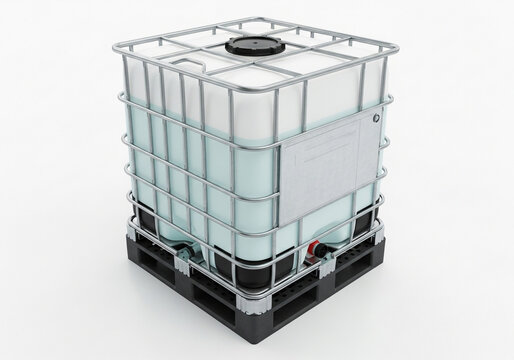
If you run a warehouse, poly-caged IBC tote size is not a throwaway detail. A few extra inches in height can wipe out a rack position, and the wrong footprint can wreck a truckload plan you thought was tight. Add forklift limits, spill rules, and hazmat requirements, and suddenly “close enough” does not feel very safe. This guide walks through the most important size ranges, how they’re set, and what they mean for storage and transport so you can match each tank to the job with less guesswork.
What Is a High-Density Polyethylene IBC Tank Tote?
Before we get into the numbers, what is an IBC tote? It’s a cube-shaped, highly durable, versatile container that holds a few hundred-gallons, built around a high-density polyethylene bottle inside a steel cage, sitting on a pallet-style base so a forklift or pallet jack can move it like any other unit load. It falls under intermediate bulk containers, built to move liquids and some solid materials in bulk.
Most rigid plastic units are designed to store liquids such as water, food ingredients, and many chemicals in a compact footprint. Common sizes from roughly 110 to 550-gallons use base dimensions close to pallet size, often around 45 by 45 inches, with height doing most of the work as capacity increases.
What Determines IBC Container Dimensions
Two tanks can both be rated for 275-gallons and still look a little different. That is not bad manufacturing; it’s a design choice from the IBC manufacturer, and it is one reason you cannot treat all IBC tote dimensions as identical.
Several knobs affect the outside footprint and height:
- Bottle geometry and wall thickness. Taller or thicker-walled HDPE bottles give more strength for aggressive products but add to overall height and weight.
- Cage and frame design. Heavier steel, tighter spacing, and taller corner posts improve stacking strength and impact resistance, at the cost of a slightly bigger envelope.
- Pallet base style. Bases made from plastic, wood, or steel sit at different heights and may extend beyond the cage. That can be the difference between a tote that clears a beam and one that kisses it.
- Rating and fittings. Units approved for hazardous materials often need thicker walls and stiffer cages. Larger valves or taller lids add a little extra height that matters in low trailers or older rack rows.
This is why engineers and safety teams rely on spec sheets instead of assuming one 275 looks and behaves exactly like the next.
IBC Model Base Size Comparison Chart
When people search most IBC totes dimensions, they’re usually asking one thing: will this fit my racks, containment, and trailers. Most rigid designs stay close to a single pallet footprint, so they work with standard handling gear, and industry references give a fairly consistent picture of the common base sizes and heights.
| Nominal Capacity | Approx Liters | Typical Base(L × W) | Typical Overall Height | Notes |
| 275-gallon | 1,040 | 45–48 × 40–45 in | mid-40 inch range | Common composite size in North America |
| 330-gallon | 1,250 | 45–48 × 40–45 in | low-50 inch range | More volume in similar footprint |
| 1000 liter | 1,000 | 1200 × 1000 mm | 1150–1200 mm | Tuned to EU / UK pallet systems |
Exact numbers depend on the IBC type manufacturer and model, so the data plate always wins. For planning, though, knowing that most units share a pallet-like footprint and only grow meaningfully in height helps you decide which standard sizes will slot into your current racks and aisles.
How IBC Dimensions Affect Transport and Warehouse Layout
Once a tank is stacked or rolling, inches and pounds matter. In North America, pallet experts point out that a 48 by 40-inch pallet is the most widely used footprint, and most rigid tanks are built to sit on that shape, so they behave like any other pallet load in racking and trailers.
The other half of the picture is weight. Common 275 and 330-gallon composite units weigh a few hundred pounds empty and climb into the low thousands when filled with water or similar products, so most planners pair the footprint with IBC tote weight when they check rack ratings and trailer limits. Safety data from the U.S. Bureau of Labor Statistics shows more than 600 forklift-related deaths and over 7,000 serious injuries across 2011–2017, which is a strong reminder that stable loads, clear aisles, and realistic stack heights are non-negotiable.
Spill planning ties in, too. EPA-based guidance notes that many secondary containment systems must hold at least ten percent of the total stored volume or one hundred percent of the largest single container. One large tote can set that whole requirement for a bay, so volume, footprint, and containment capacity all need to be planned together.
International IBC Dimension Variations
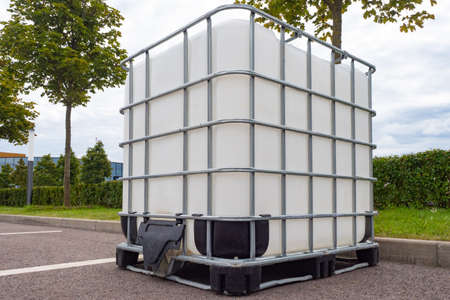
Things get more interesting once you cross borders. In the United States, the go-to pallet footprint is 48 by 40 inches, while many European and UK operations rely on 1,200 by 800-millimetre or 1,200 by 1,000-millimetre pallets. As you would expect, rigid tanks built for those systems follow those footprints.
A 1000-liter unit on a 1,200 by 1,000-millimetre base behaves much like a single pallet in European racking and trailers, with height adjusted to hit the target volume. Buyers comparing listings from different regions, or sourcing through partners such as Container Exchanger for multiple sites, usually line up litre or-gallon rating, base size, and height before they approve any new model for use.
FAQs About Carbon Steel Caged IBC Tote Dimensions
What are the dimensions of a 1000-liter IBC tote?
Many IBC totes of 1000 liters sit on a base around 1,200 × 1,000 mm and stand about 1,150–1,200 mm tall.
How much do 330-gallon and 275-gallon IBC totes weigh?
Typical composite 275 and 330-gallon plastic IBC totes weigh a bit over 100 pounds empty and reach a few thousand pounds when full. Metal IBC totes are heavier, so always check the data plate for exact empty and full weights.
Choosing the Right IBC Tote Dimensions for Your Operation
Start with your space first: rack openings, beam ratings, aisle widths, trailer heights, and containment rules will usually narrow down which tanks actually make sense. Once you know the sizes that fit, you can focus on capacity and product instead of fighting bad dimensions. When you’re ready to find quality IBC totes for sale, use those specs as your checklist and shop the available totes at Container Exchanger so you’re only bringing in tanks that work with your warehouse, not against it.