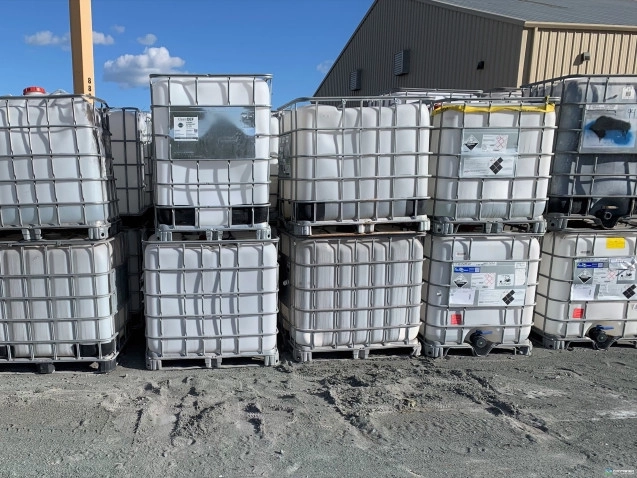
If your operation moves liquids or chemicals regularly, a 330-gallon IBC tote is probably already on your radar, and for good reason. One tote replaces several barrels or drums, reduces handling time, and keeps bulk storage manageable.
But before you order a pallet’s worth, you need to know exactly what you’re working with. Getting the dimensions wrong means wasted floor space at best, a forklift incident at worst. Here’s everything you need to know.
What are the Standard 330-Gallon IBC Tote Dimensions?
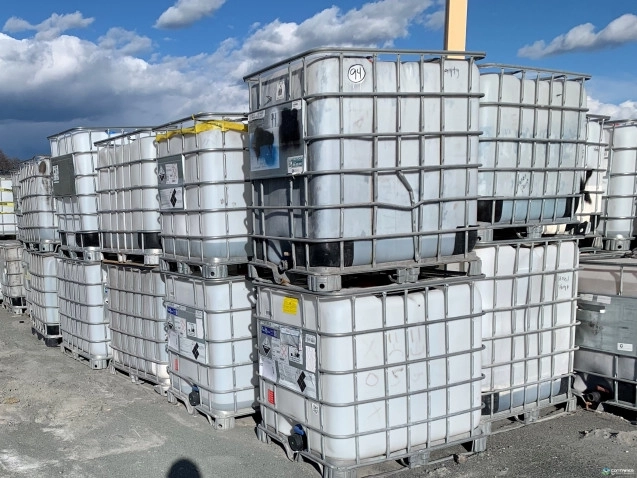
Most 330-gallon Intermediate Bulk Container (IBC) tanks or totes are manufactured at 48 inches long, 40 inches wide, and 53 inches tall. The interior is slightly smaller, but still stores the full 330 gallons of volume (roughly 1,250 liters) you’re paying for.
That said, not every manufacturer hits those numbers exactly. Wall thickness, pallet base design, and cage construction all introduce small variations. For practical purposes, like fitting forklifts, lining up with standard trailers, and planning shelf clearance, the 48 x 40 x 53 baseline is what you should plan around.
How Much Does a 330-Gallon IBC Tote Weigh?
Empty, expect somewhere between 145 and 170 pounds depending on the cage, valve hardware, and pallet base. That’s already too heavy for a two-person lift, so don’t try it.
Filled with water, you’re looking at close to 2,900 pounds. Denser chemicals push that number higher. Know your product’s specific gravity before loading trailers or stacking, and confirm your forklift’s rated capacity before moving full totes.
What Are 330-Gallon IBC Totes Made Of?
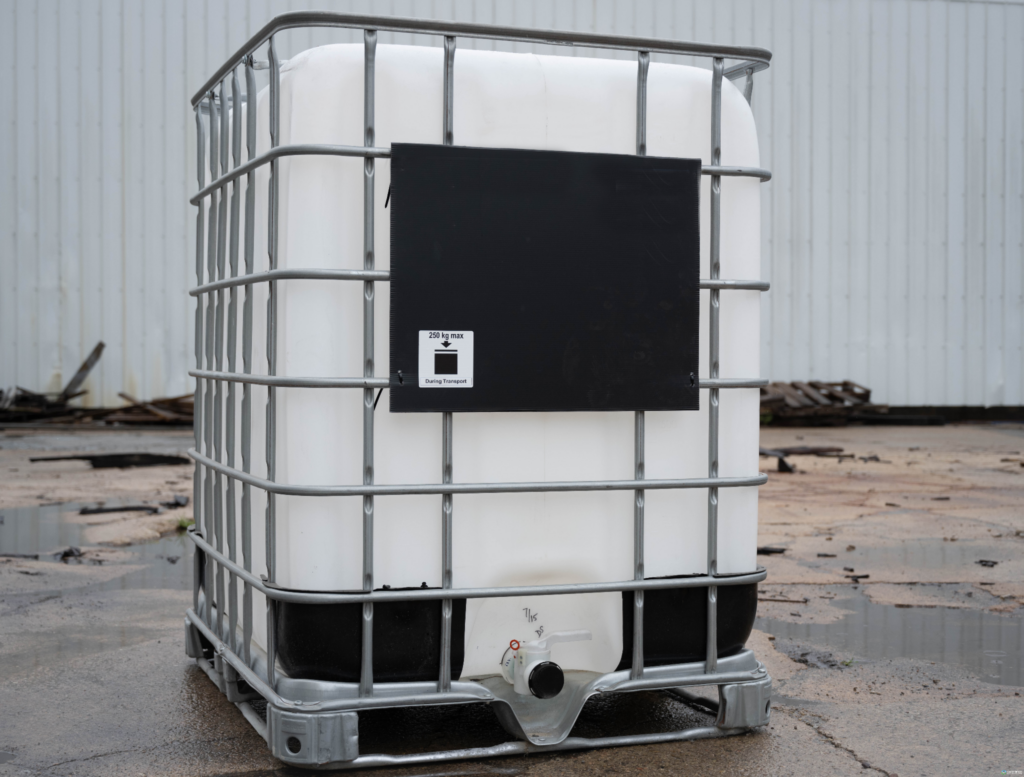
330-gallon IBC totes are made from high-density polyethylene (HDPE) and are supported by a galvanized steel protective cage. The inner tank of 330-gallon IBC totes is manufactured from 100% virgin HDPE resin, which is FDA-approved food grade and BPA-free. It’s pretty versatile and works well for consumables, hazardous chemicals, and food-grade oils alike.
Surrounding that tank is a galvanized steel cage that keeps everything rigid during transport and gives forklift tines something solid to work against. The combination of materials and versatility holds up well to warehouse abuse in many applications, but the cage is the first thing to inspect on used or reconditioned totes. A bent or cracked cage significantly changes the stacking math.
Stacking and Handling: What You Need to Know
Empty totes can stack three high. Full totes drop to two high — no exceptions. Before stacking anything, inspect the cage for damage. An uneven or compromised cage distributes weight unpredictably, which is how the product gets damaged, and people get hurt.
All 330-gallon IBC totes use a two-way or four-way pallet entry, so standard forklifts and pallet jacks work without any special attachments.
Which 330-Gallon IBC Tote Variation Do You Need?
There are a few common configurations worth knowing:
- Standard HDPE with galvanized cage. The workhorse option, suitable for most liquids and dry flowables
- Insulated totes are built for temperature-sensitive products that can’t handle ambient warehouse conditions
- Reusable stackable tanks are reinforced for higher cycle counts, worth the extra upfront cost if you’re refilling and reusing regularly
Each type has slightly different dimensions and weight specs, so pull the exact numbers from your supplier before building out your storage layout.
330 IBC Tote Dimensions: How to Measure
If you’re measuring the IBC tote dimensions, 330-gallon specifically, you’ll want to measure L x W x H. Here’s what those mean.
- Length : longest exterior side
- Width : shorter exterior side
- Height : floor to top of lid, cage included
- Optional : outlet ball valve diameter, lid opening size, cage width at base
These numbers tell you whether the tote clears your racking, fits your trailer, and works with your filling equipment.
Common Questions About 330-Gallon IBC Tank Dimensions
How much space does a 330-gallon IBC tote take up?
A 330-gallon IBC tank can take up about 48″ x 40″ of floor space, with 53″ of vertical clearance needed.
Can 330-gallon totes fit standard pallets?
Yes. The footprint of 330-gallon totes is designed around standard pallet dimensions, which makes them straightforward to move and ship.
Are all 330-gallon IBC totes all the same size?
No. Cage design and wall thickness create small differences between manufacturers. Always verify with your supplier.
Can you stack 330-gallon totes with a steel cage safely?
Yes. 330-gallon totes are safe to stack three high, empty (130ish lbs), or two high, full (155+ lbs, with ease. However, always inspect the cage on each unit first.
Finding the Right Tote for Your Operation
Once you know the dimensions, weight limits, and which variation fits your product, sourcing becomes straightforward.
Container Exchanger carries 330-gallon IBC totes, 275-gallon IBC totes, 55-gal barrels or drums, insulated storage containers, bulk containers, and much more. Whether you’re scaling up or filling in gaps in your current setup, the options are there.