If you run a large warehouse, you already know that containers quietly dictate how the entire operation flows. A container that’s too tall throws off racking. One with the wrong valve slows batching. One that doesn’t quite fit the forklift pattern becomes a daily annoyance that no one budgets for but everyone feels.
Introduction to Collapsible and Rigid Intermediate Bulk Containers
Intermediate bulk containers (IBC) tanks sit right in the middle of those decisions. An IBC tank is its own category of equipment, with specific design logic behind it, and understanding that logic saves space, time, and cleanup later.
This guide walks through what an IBC tank actually is, how it’s built, the different IBC types you’ll see in warehouse environments, and how businesses decide which ones make sense for their operation.
What Is an IBC Tank (and What People Mean By “IBC Tote”)
Okay, so what is an IBC tote or tank exactly? It’s short for Intermediate Bulk Container. The word intermediate matters more than people realize. It doesn’t describe quality or size in isolation — it describes position.
An IBC tank is designed to hold quantities that fall between small containers, like 55-gallon drums and large bulk materials transport tanks. It cuts down the number of containers you handle, but a standard forklift can still move them around the building without special gear.
People use a few names for the same container, such as IBC tank, IBC tote, pallet tank, and bulk container. The name changes by industry and habit, but the role stays the same.
From a regulatory standpoint, intermediate bulk containers are standardized industrial shipping containers. Many rigid IBCs are tested and certified under UN and DOT frameworks for the transport and storage of hazardous and non-hazardous materials. The Compliance Center’s May 27, 2025 overview of UN performance packaging says, “IBCs are tested and evaluated as a complete system, tank and discharge components included.”
How an IBC Tank is Built
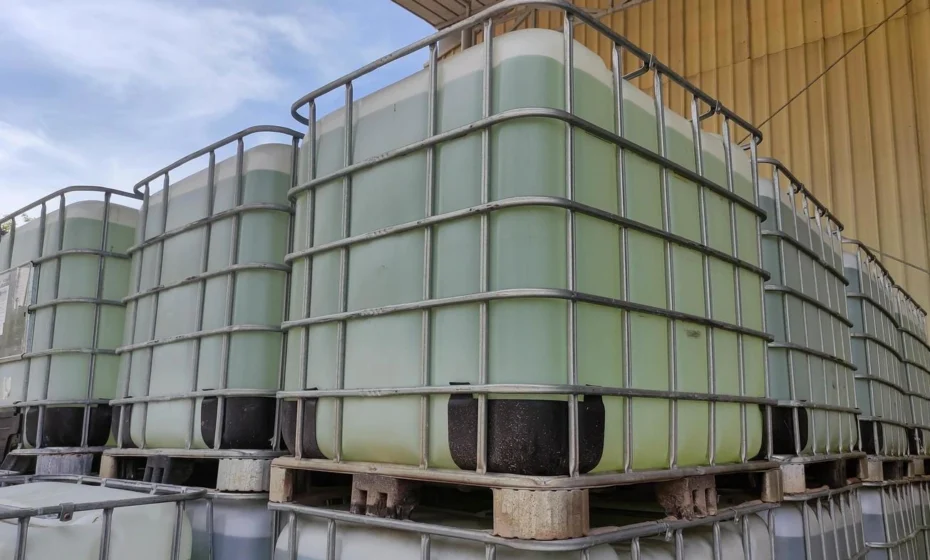
Most rigid IBC totes, containers, or tanks share a familiar structure, even if the materials vary.
The inner vessel is the inside, which holds the product. Around that is a pallet-style base, either integrated or attached, that allows the tank to be lifted by forklifts or pallet jacks. Up top is a fill opening with a threaded or bolted cap. Down at the bottom, there’s a discharge valve that lets you control how the product comes out.
Forklift entry can be two-way or four-way, and that alone changes how smoothly the tank moves through tight aisles and staging areas. Valve style and outlet size affect compatibility with pumps, hoses, and batching equipment. Issues arise when those specs don’t line up — transfers take longer, spill risk goes up, and the crew ends up inventing workarounds that stick.
Common IBC Tank Materials
Rigid IBC tanks are typically manufactured from one of three material families.
- High-Density Polyethylene (HDPE) durable plastic is lighter than metal, holds up well to bumps and moves, and works for plenty of everyday, non-flammable liquids.
- Composite IBCs pair an HDPE inner liner with a stainless steel cage, usually galvanized. That steel cage is basically the bodyguard.
- Metal IBCs (carbon steel or stainless) come into play when the material demands tighter containment or tougher performance than plastic can offer. These show up most often as chemical IBCs specifically manufactured for safe handling of many chemical commodities and are made from chemically-resistant materials.
Material choice changes what you can put in the tank, how heavy it is to handle, and what you can ship without getting yourself in trouble.
Why Cost-Effective “Intermediate Bulk” Matters
Compared to drums, IBCs reduce the number of containers a warehouse needs to store, move, and track. That reduction compounds. When you’re dealing with fewer containers, you’re also doing fewer picks and moves. The aisles stay clearer, staging stays calmer, and peak shifts don’t turn into a constant game of “who’s blocking who.”
Most warehouse operations gravitate toward IBC capacities in the 275 to 330-gallon range. 330-gallon IBC totes with plastic pallet options, are still manageable with standard material handling equipment, but they dramatically reduce packaging volume. Their cubic shape also makes them easier to position in racks or trailers than round drums, which waste space along edges and corners. 275 to 330-gallon IBC totes with metal pallet options are even sturdier ways to hold bulk items.
“Intermediate” isn’t marketing language. It’s a functional category that exists because it solves a real logistics problem.
Broad Types of Rigid and Flexible IBC Containers and Tanks
Flexible Intermediate Bulk Containers (IBC)
Flexible IBCs, also sometimes called collapsible or folding IBCs, are constructed from woven polyethylene or polypropylene fabric. They’re designed for dry, flowable materials like powders, granules, and agricultural products. Once emptied, they collapse flat, which reduces return transport volume and storage space. These won’t work for liquids, and they don’t protect contents the way rigid tanks do.
Rigid Plastic IBC
Rigid plastic IBCs are the most common sight in warehouses. Typically molded from HDPE, they’re durable, reusable, and suitable for many non-hazardous liquids and some semi-solids. Their integrated pallet bases make them easy to move, and their standardized dimensions simplify storage planning.
Composite IBC
Composite IBCs combine a plastic inner vessel with a steel cage. The cage adds structural strength and protects the liner from impact. Chemical and industrial uses of IBCs include storing materials and transporting hazardous materials and even non-hazardous chemicals, or even in agriculture, where they can store fertilizers and pesticides. Composite IBCs are heavier than rigid plastic and can be more awkward to maneuver in tight aisles.
Metal IBC (Stainless or Carbon Steel)
Metal IBCs are built for demanding environments. They’re often selected for flammable materials, aggressive chemicals, or high-temperature applications. The tradeoff is cost and weight, but for certain materials, they’re the only viable option.
How to Choose the Right IBC Tank
Choosing an IBC tank starts with compatibility, not price.
The container material must be chemically compatible with its contents. HDPE works well for many liquids, but not all. Metals handle different exposures but introduce weight and cost considerations.
Volume and external dimensions matter next. The tank needs to fit your racking, staging areas, and transport lanes without creating choke points. A container that technically fits but disrupts flow costs more over time than one that’s slightly more expensive upfront.
The regulatory requirements, last updated January 2026, come into play when hazardous materials are involved. Containers must match the cargo’s classification and carry the correct UN markings.
Reuse plans matter too. If a tank will cycle through multiple uses, cleaning and inspection processes need to be realistic, not aspirational.
Supplier quality often gets overlooked. Clear container histories, inspection standards, and consistent sourcing reduce surprises once the tank is on the floor.
IBC Tank Uses (With Real Examples)
IBC tanks show up across industries because they solve the same problem in different ways.
Industrial and Manufacturing Caged IBCs/Chemical IBCs
Manufacturing facilities use caged IBCs to store solvents, detergents, adhesives, and process chemicals. Many of these containers are UN and DOT-rated, allowing them to move from supplier to plant and then into internal storage without repackaging.
Beverage and Food-Grade IBCs
Food-grade IBCs are manufactured to meet U.S. FDA requirements for food contact materials. They’re commonly used for syrups, edible oils, beverage ingredients, and other consumables. The U.S. Food and Drug Administration regulates food contact substances under Title 21 of the Code of Federal Regulations, including olefin polymers such as HDPE under 21 CFR 177.1520. In food environments, container history, cleaning practices, and dedicated use matter just as much as material.
Agriculture & Construction
In agriculture, IBCs store fertilizers, pesticides, and irrigation water. On construction sites, they hold dust suppression water, concrete additives, and temporary jobsite fluids. Their durability and forklift accessibility make them practical outside controlled warehouse settings.
Benefits of IBC Tanks
IBC tanks are popular because their design solves multiple operational problems at once.
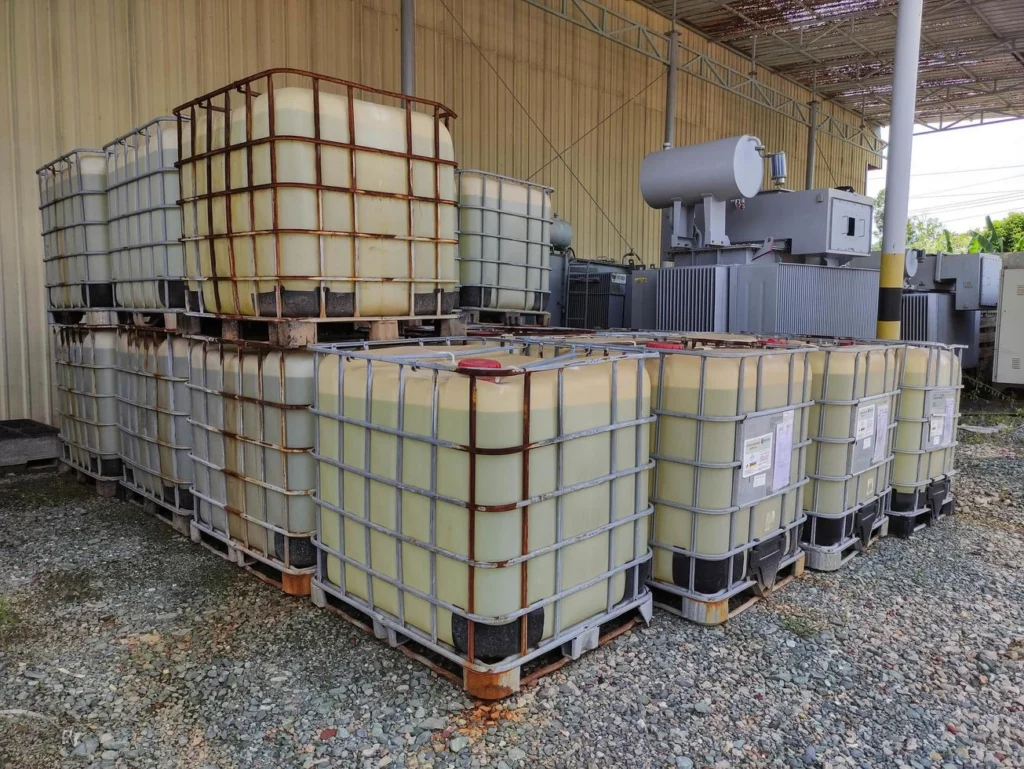
Their stackable, cube-shaped design makes better use of space than round containers. Warehouses can store more material in the same footprint, which matters when expansion isn’t an option. Integrated pallet bases reduce handling time and eliminate the need for separate skids.
Durability supports reuse. A well-maintained IBC tank can remain in service for years, spreading its cost over many cycles.
A closed system keeps the product where it belongs. Less exposure, less junk getting in, fewer “how did that happen?” moments. That matters with ingredients. And once you’re running volume, the payoff is real: fewer slowdowns, fewer cleanup jobs, and less product wasted from small leaks and messy hookups.
IBCs can also be customized with different fittings and accessories to meet your specific business needs.
Cost & Market Data
You’ll find IBC tanks for sale in three common conditions: new, used, and reconditioned.
| Condition | Typical Cost Range | Notes |
|---|---|---|
| New | Highest | Preferred for food and sensitive materials |
| Used | Mid-range | Prior contents must be verified |
| Reconditioned | Lowest | Not suitable for potable water |
Industry adoption continues to grow. A 2025 market analysis from the Future Market Insights estimates steady global growth for IBCs through 2035, driven by chemical manufacturing, food processing, and large-scale warehousing. The shift toward reusable packaging is a major factor behind that trend.
Maintenance & Best Practices
Maintenance extends an IBC tank’s useful life. Regular cleaning prevents residue buildup. Valve and seal inspections catch small issues before they become leaks. Safe stacking practices protect both containers and personnel.
Many IBC components are recyclable at the end of life. Before reuse, always confirm previous contents, structural condition, and rating compatibility with the next application.
What Others Don’t Tell You (Unique Insights)
IBC tanks often support sustainability goals through reuse, but reuse has limits. A tank that once held industrial chemicals is not interchangeable with a food-grade container. DIY repurposing for storing drinking water or aquaponics carries real risk without proper certification and cleaning.
The biggest misconception is that all IBCs are “basically the same.” In practice, small design and material differences have large operational consequences.
Frequently Asked Questions
How long will water stay fresh in an IBC tank?
Water IBCs are the most used type and are standardized for use with potable and non-potable water. How long water stays fresh in an IBC tank comes down to the tank’s history and how you store it. A potable-water or food-grade IBC that’s been cleaned and stored right, sealed up and out of the sun, is going to treat your water a lot better than an industrial tank with a mystery history.
If you’re storing water for facility use, the practical move is to start with a tank intended for potable water, sanitize it before filling, keep it sealed, and store the tank in a cool, shaded spot.
Are IBC tanks safe for drinking water?
IBC tanks are safe for drinking water only when they are specifically rated for potable water or food-grade use and the container’s prior contents are known. Used or reconditioned industrial IBCs can hold residues from whatever was stored before, even if they look clean.
How long does an IBC tank last?
An IBC tank commonly lasts 5 to 10 years in warehouse service, and sometimes longer, but its lifespan depends on how it’s used and handled. Frequent forklift impacts, rough yard storage, UV exposure, and carrying harsh chemicals all shorten service life. Valves and seals often wear out before the tank body does, and those parts are usually where leaks and downtime start.
Final Thoughts: Why IBC Tanks Make Sense for Modern Warehousing
IBC tanks occupy a practical middle ground. They store more than drums, move easier than bulk tanks, and adapt well to warehouse workflows that depend on efficiency and repeatability. When selected with care, they reduce handling, simplify storage, and support compliance rather than complicate it.
For businesses evaluating IBC tanks for sale, sourcing matters. Container Exchanger connects buyers and sellers around reusable packaging that fits real operational needs, not just catalog specifications. Check our online site today and find the IBC tote or tank you need.