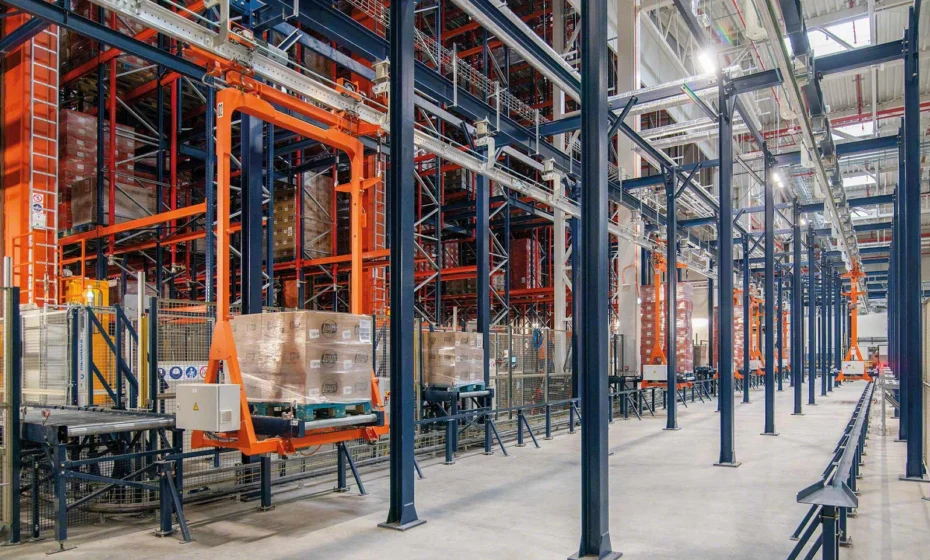
Walk into almost any large warehouse, and you’ll see the same thing: aisles that feel tighter than they should, vertical space that isn’t quite working hard enough, and inventory sitting where it landed instead of where it actually belongs. Nobody set out to design it that way. It usually happens over time, one workaround at a time, until storage becomes something everyone complains about but nobody wants to touch.
Warehouse storage optimization isn’t about ripping everything out and starting over. It’s about making smarter use of the wasted space, systems, and equipment you already rely on, so movement feels easier, not harder.
That’s where this conversation heads next.
Introduction to Warehouse Storage Space Optimization
Warehouse storage optimization matters because the pressure is real. Lease rates keep climbing, labor is harder to find, and most facilities don’t have the luxury of expanding their warehouse footprint just to fix congestion. Retrofitting older buildings brings its own limits, from ceiling height to column spacing, and moving locations is rarely simple.
At the same time, order volumes fluctuate, SKU counts creep upward, and teams are asked to do more inside the same four walls. Storage decisions start affecting flow, safety, and morale, not just capacity. When storage works, everything downstream feels calmer. When it doesn’t, even small issues turn into daily friction.
What Is Warehouse Storage Optimization?
Optimizing warehouse space is the practical work of arranging inventory, equipment, and workflows so that space supports movement instead of slowing it down. It focuses on how products enter the building, where they live, how often they’re touched, and how quickly they leave again.
Done well, warehouse optimization improves pick rates, reduces travel distance, and makes inventory easier to see and manage. It also lowers operational costs tied to extra handling, mis-slots, and congestion. This isn’t theory. It shows up in throughput, accuracy, and how smoothly shifts run.
A well-optimized setup also supports better inventory management, because items are stored in ways that reflect how they actually move. When storage decisions align with real demand, the operation feels less reactive and more controlled.
Benefits of Proper Warehouse Optimization
The biggest benefit of storage optimization is flow. When inventory is stored logically, the picking process shortens, congestion drops, and teams spend less time correcting mistakes caused by poor placement.
There’s also a space benefit. Better layout choices reclaim valuable space for storage without adding square footage. That often delays expensive expansions and helps teams make the most of their existing space.
Over time, these improvements drive operational efficiency. Fewer touches, clearer paths, and more predictable movement add up. The result is smoother shifts, lower stress, and an operation that’s easier to manage day after day.
How Efficient Warehouse Storage Affects the Supply Chain
Storage decisions inside the building ripple outward. Poor placement can delay order cutoffs, disrupt carrier scheduling, and create blind spots around inventory levels. When products aren’t where systems expect them to be, availability looks better on paper than it is on the floor.
Efficient storage improves responsiveness. Orders move faster, docks turn more smoothly, and inventory stays visible. That reliability supports downstream partners and helps meet service commitments without last-minute scrambles. In many warehouse operations, storage layout quietly determines how well the entire supply chain keeps its promises.
KPIs & Metrics: How to Measure Warehouse Storage Performance
| KPI | What It Measures | Why It Matters |
|---|---|---|
| Storage Utilization | Percentage of space in use | Shows how much capacity is actually working |
| Inventory Turnover | How fast stock moves | Highlights slow or excess inventory |
| Order Picking Accuracy | Pick correctness | Connects storage logic to errors |
| Travel Distance per Pick | Movement required | Reveals layout inefficiencies |
| Slotting Efficiency | Item placement vs demand | Indicates slotting health |
Storage performance needs measurement, not guesses. Key performance indicators (KPIs) help teams understand what’s working and where space is being lost.
Tracking utilization, travel distance, and accuracy highlights bottlenecks that layouts alone don’t reveal. These metrics don’t exist to punish teams. They exist to guide adjustments and support continuous improvement over time.
Key Strategies to Optimize and Increase Storage Capacity
Before investing in new technology, most warehouses find gains by fixing layout and flow. Small changes often unlock more value than expensive upgrades early on.
Layout Design and Aisle Optimization
Layout decisions should follow movement patterns, not just density goals. Forklift type, turning radius, and traffic direction all shape how aisles function in practice. Narrow aisles increase density, but they also demand tighter control and can slow mixed warehouse operations.
Good warehouse layout design places high-demand items near packing and shipping, while slower SKUs live in secondary zones. Zoning inbound and outbound flows reduces cross-traffic and makes shifts feel more predictable. True warehouse layout optimization prioritizes flow first, density second.
Vertical Space Utilization
Vertical storage is one of the fastest ways to reclaim valuable floor space. High-bay racking, mezzanines, and multi-tier systems allow warehouses to grow upward instead of outward.
Choosing the right racking depends on SKU size, weight, and handling frequency. Safety clearances, load ratings, and access paths matter as much as capacity. A mid-sized distributor profiled by Material Handling & Logistics showed how adding a mezzanine increased usable storage capacity without expanding the building footprint.
Pallet and Racking Systems
The wrong racking choice becomes obvious over time. Systems that looked efficient on paper can slow access or create handling headaches.
Selective racking offers flexibility. Drive-in and drive-through systems increase density but limit access. Pallet-flow and push-back systems support higher throughput but require careful SKU discipline. This is where storage systems must match how inventory behaves, not how it’s sold.
In many warehouse operations, pallet containers support consistent handling and reduce mismatches between loads and racks.
Slotting and Inventory Slotting Optimization
Slotting assigns products to locations based on how often they move. Static slotting fails as demand shifts. Dynamic approaches adjust placement based on velocity, seasonality, and SKU behavior.
Most warehouses update their slotting regularly to respond to changes in demand, inventory turnover, and seasonal patterns. Many warehouse operations find that quarterly or semi-annual reviews help keep inventory placement aligned with velocity and picking effort, preventing old placements from becoming inefficient as demand shifts.
“Slotting updates should happen regularly to keep up with changing demand, inventory turnover and seasonal shifts. Most businesses find quarterly or semi-annual updates work well…” — LightspeedHQ, March 21, 2025
For high-touch items, industrial wire-mesh storage baskets can make pick locations easier to maintain, especially when teams restock frequently and need visible, consistent slots. Dynamic slotting shortens travel paths and reduces fatigue while supporting warehouse efficiency.
Cross-Docking, Lean Inventory, and Material Handling Equipment
Cross-docking reduces storage time by moving goods directly from inbound to outbound. The benefit isn’t theoretical. Less sitting inventory frees space and reduces handling.
Lean practices focus on what gets touched, what moves straight through, and what shouldn’t linger. Tools like stacking totes and stackable wire baskets for storagesupport fast transfers and organized staging without overbuilding storage. Plastic storage binsandmetal storage organizerswork well for small-parts staging and kitting because they keep pick faces tidy and make replenishment faster without rebuilding an entire zone.
Technology: Warehouse Automation for Optimization
Technology supports storage decisions, but it shouldn’t dominate them. The right systems reinforce good layouts and data discipline.
Warehouse Management System (WMS)
A robust WMS improves inventory visibility through real-time tracking and placement logic. It supports dynamic slotting, reduces human error, and aligns storage with demand patterns.
When integrated well, a WMS supports better demand forecasting and smoother replenishment cycles. According to Gartner’s Magic Quadrant for Warehouse Management Systems (2024), warehouse operations using real-time WMS insights regularly outperform manual systems in accuracy and speed.
Automated Storage and Retrieval Systems (AS/RS)
AS/RS solutions increase density and consistency but aren’t universal fits. Ceiling height, SKU uniformity, and capital planning all matter. These systems shine in high-volume, repeatable environments.
They can significantly enhance accuracy while reducing labor intensity, but they demand long-term commitment and careful design.
Robotics-as-a-Service (RaaS)
RaaS models allow warehouses to test automation without a heavy upfront investment. Instead of owning hardware, operations subscribe and scale as needs change.
Framed correctly, RaaS manages risk. It reduces dependence on manual labor while improving safety in repetitive or hazardous tasks. Autonomous mobile robots and automated guided vehicles often enter operations this way.
RFID and Barcode Tracking
Barcode and RFID systems improve accuracy and support better slotting decisions. They feed clean data into WMS platforms and reduce scanning delays during picking and put-away.
Industry studies reported by Logistics Management show barcode-driven systems improving picking accuracy by double-digit percentages when paired with disciplined storage rules.
Internet of Things (IoT) Devices
IoT devices focus on alerts, maintenance, and disruption prevention. Sensors monitor equipment health, temperature, and movement, triggering action before failures occur.
Used correctly, IoT supports technology integration without overwhelming teams. It’s less about futuristic dashboards and more about preventing small problems from growing.
Warehouse Storage Mistakes to Avoid
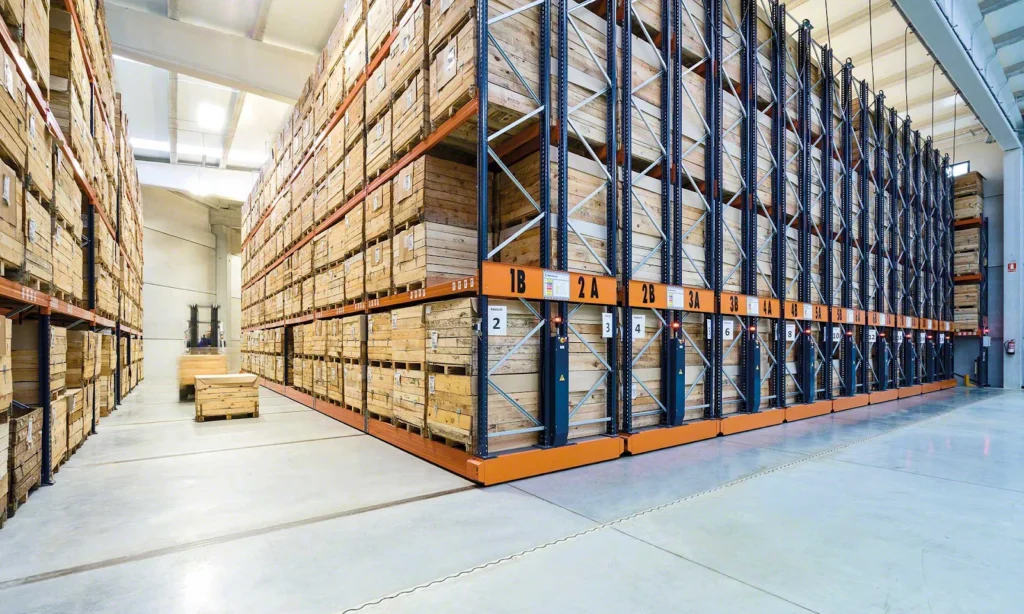
Most warehouse storage problems don’t come from bad intentions. They come from decisions that made sense at the time and never got revisited. As volume grows and SKUs change, those old choices quietly turn into bottlenecks. These are the mistakes that show up again and again in large facilities, along with practical ways to avoid them.
Overcrowding Racks Beyond Safe Limits
When racks are packed too tightly, access slows down, and mistakes increase. Forklift operators have less margin for error, and product damage becomes more likely. Throughput often drops long before anyone notices the racks are technically “full.”
How to avoid it: Treat full capacity as a warning sign, not a goal. Many operations maintain better flow below roughly 85% utilization. Leaving breathing room keeps movement predictable and safer.
For heavy, sharp, or dirty components, galvanized metal storage containers reduce breakage and leaks that can turn a single damaged pallet into a bigger cleanup and downtime issue.
Ignoring SKU Turnover When Assigning Storage Locations
Fast-moving items end up buried behind slow sellers, forcing pickers to travel farther than necessary. Over time, this adds minutes to every order and wears down staff.
How to avoid it: Review SKU velocity regularly and adjust slotting so high-frequency items stay closest to packing and shipping. Storage locations should reflect how items move today, not how they moved last year.
Using Oversized Containers That Waste Cubic Space
Containers that are “close enough” often leave empty air around products, eating into valuable storage space without adding protection. This problem compounds vertically.
How to avoid it: Match container size to product dimensions whenever possible. Smaller, right-sized containers allow tighter stacking and better use of rack height.
Industrial metal storage baskets can also help when right-sizing is tricky, since they hold irregular items without forcing oversized cartons that waste rack cube.
Letting Excess Inventory Linger Without Review
Slow-moving or obsolete stock quietly occupies space that could support active SKUs. Over time, this leads to cluttered racks and poor visibility.
How to avoid it: Schedule regular inventory reviews to identify items that haven’t moved within defined timeframes. Removing or consolidating excess stock frees capacity without changing layout.
Designing Strictly for Density Instead of Flow
Maximizing density looks good on paper, but often slows real-world operations. Narrow aisles and overpacked zones create traffic conflicts and longer pick paths.
How to avoid it: Balance density with movement. Test layouts during peak shifts and observe where congestion forms. Flow should guide design decisions, not just storage counts.
Treating Storage as Static
Storage layouts that never change fall out of sync with demand patterns. What worked during one sales cycle can become inefficient during another.
How to avoid it: Treat storage design as something that evolves. Even small quarterly adjustments can prevent large inefficiencies from building up.
Fixing these issues often delivers substantial cost savings, such as reduced labor costs due to more efficient operations, faster than adding automation or expanding the building. Most improvements come from seeing the space differently, not buying something new.
What Others Don’t Tell You About Warehouse Space Optimization
Warehouse space optimization rarely succeeds as a one-time project. Layouts, slotting plans, and storage rules drift over time as inventory mixes change and customer demand shifts. Teams that revisit their setup regularly tend to outperform those that wait for a major redesign.
People matter as much as plans. A layout that looks perfect on a screen can struggle if teams aren’t trained on new flows or don’t trust the changes. Small habits, like where pallets get staged or how overflow is handled, shape results more than most diagrams.
There’s also a tipping point with density. Push storage too tight and picking slows, errors increase, and frustration creeps in. The strongest operations aim for balance, using density where it helps and flexibility where it keeps work moving.
Quick Reference Warehouse Optimization Checklist
This checklist is meant to be practical, not theoretical. It’s the kind of list that helps supervisors spot issues before they turn into daily headaches.
- Measure current storage utilization and identify congestion zones
- Review slotting monthly and adjust for demand shifts
- Use ABC analysis alongside WMS data to prioritize placement
- Expand upward with racking or mezzanines before expanding outward
- Match rack types to SKU size, weight, and turnover
- Audit aisle widths and forklift traffic during peak shifts
- Track key storage KPIs and review them consistently
Used regularly, this checklist supports steady improvements instead of disruptive overhauls.
Frequently Asked Questions
How do I maximize vertical storage?
Maximizing vertical storage starts with evaluating ceiling height, rack ratings, and access needs. Mezzanines and high-bay racking often unlock capacity safely.
What’s the best rack type for my warehouse?
The best rack depends on SKU velocity, load size, and access needs. Flexible systems suit mixed inventories, while flow systems support high-throughput environments.
How does WMS help optimization?
A WMS improves placement decisions using real-time data, reducing mis-slots and supporting dynamic adjustments as demand changes.
What can I use to identify and remove obsolete inventory?
Regular audits and data reviews help identify slow-moving items. Removing obsolete stock frees space and improves forecasting accuracy.
From Storage Decisions to Operational Momentum
Warehouse storage optimization works when decisions reflect reality on the floor. Layout, equipment, data, and people all play a role. Small improvements compound, improving warehouse efficiency, reducing friction, and helping teams meet rising consumer expectations.
When storage aligns with flow, operations gain stability. That stability supports better service, fewer surprises, and stronger performance across logistics operations. For businesses evaluating containers, racking, or IBC totes for sale, working with a marketplace like Container Exchanger helps connect storage decisions to real operational needs, not just catalog specs.